Guest Post By Daniel Rifkin
MTPS, CTSS, RacquetFit, Etcheberry, USPTA
MTPS, CTSS, RacquetFit, Etcheberry, USPTA
Too many times I see players (of all ages and levels) get out to the court and with no physical warm up they start doing some mini tennis hitting and slowly move back to the baseline eventually getting into a live and full force hitting session. Even worse is when players roll up to a tournament match and jump on court using the match warm up as their warm up to compete. No wonder why you take the whole first set to get going and start feeling good. I don't know who "you" is, but "you" know who you are.
Major components that hinder performance AND enhance performance are missed when "you" do this. Doing a proper warm up for tennis not only prepares the body to perform, it can reduce the risk of injuries and put your mind in a state of confidence and high performance. A thorough tennis warm up should be implemented if you are serious about building your body to play at the highest level, and doing it for the long haul.
How familiar does this sound? Start off with some jogging and side shuffles. Maybe add a few leg swings here and there, force your body into some rotational movements and sprinkle in a shotgun approach to some banded shoulder drills. This is seen far too often. Even organized group physical warm ups may be missing some key elements to help take their athletes performance to the next level.
A top notch and thorough warm up should consist of multiple phases that blend together smoothly, build on each other, and eventually lead to the actual tennis hitting warm up. Each phase will focus on different needs for your unique body along with prepping it for the demands of tennis. Naturally warm ups will have many similarities among players, but a really good warm up can be made your own and will have some specifics that are unique to you. Here are my different phases for a complete tennis warm up:
Phase 1 - Release
This phase is imperative for the tennis athlete to focus on the area(s) of their body they know are restricted. This could be a joint with restricted range of motion or muscle tissue that you know needs to be released. There are many methods that can be used to assist in this process. Just going straight out to the court will totally skip over this concept of "releasing" and joint and tissue restrictions will remain active as you are trying to play your best tennis.
Phase 2 - Stretches and Mobilization
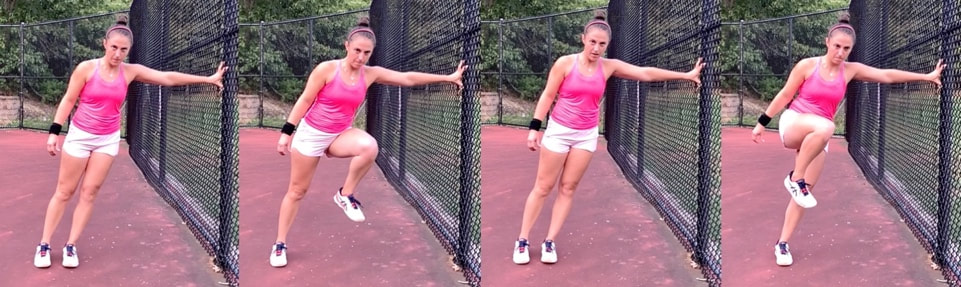
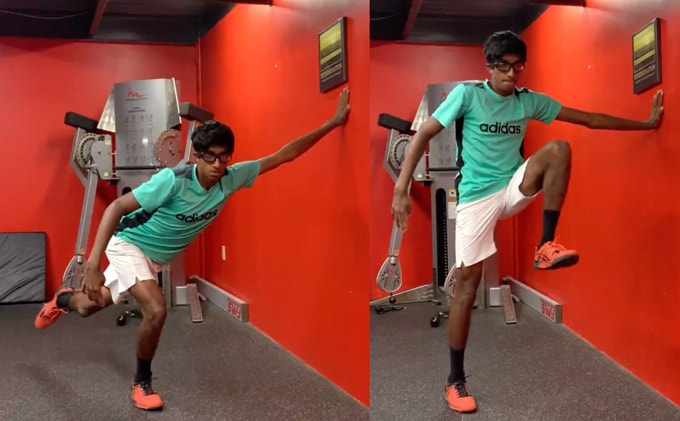
This phase focuses on opening up tissue in restricted movement patterns. This phase is also used in opening up different joints ranges of motion that need to express high demands of mobility during play. The ankles, hips, mid back and shoulders are a huge focus here. This phase consists of specific stretches or mobilizations performed with breathing, or in a dynamic fashion.
Phase 3- Correctives and Stabilization
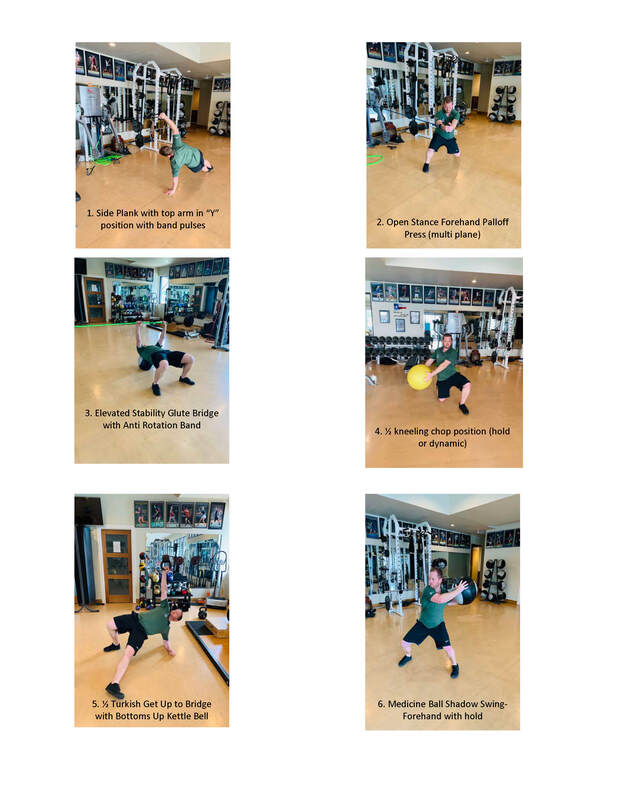
Now that the body is opened up to its best movement potential, you would perform certain corrective exercises. These corrective movements and/or joint stabilizations will help reinforce a desired position or strength in an area that is a cause for potential pain/weakness or inefficiencies in your strokes/movement. They can improve joint mechanics (higher level joint function), as well as solidifying the ranges of motion opened up from phase 2 above. An example of this would be to reinforce the shoulder joint in an overhead position with a bottoms up kettlebell hold. This would be done after mobilizing (phase 2) the proper joints/tissues to allow this new overhead position. This phase is crucial if you want to feel your body is strong, controlled and connected while competing.
Phase 4 - Activation and Multi-Planar Movement Integration
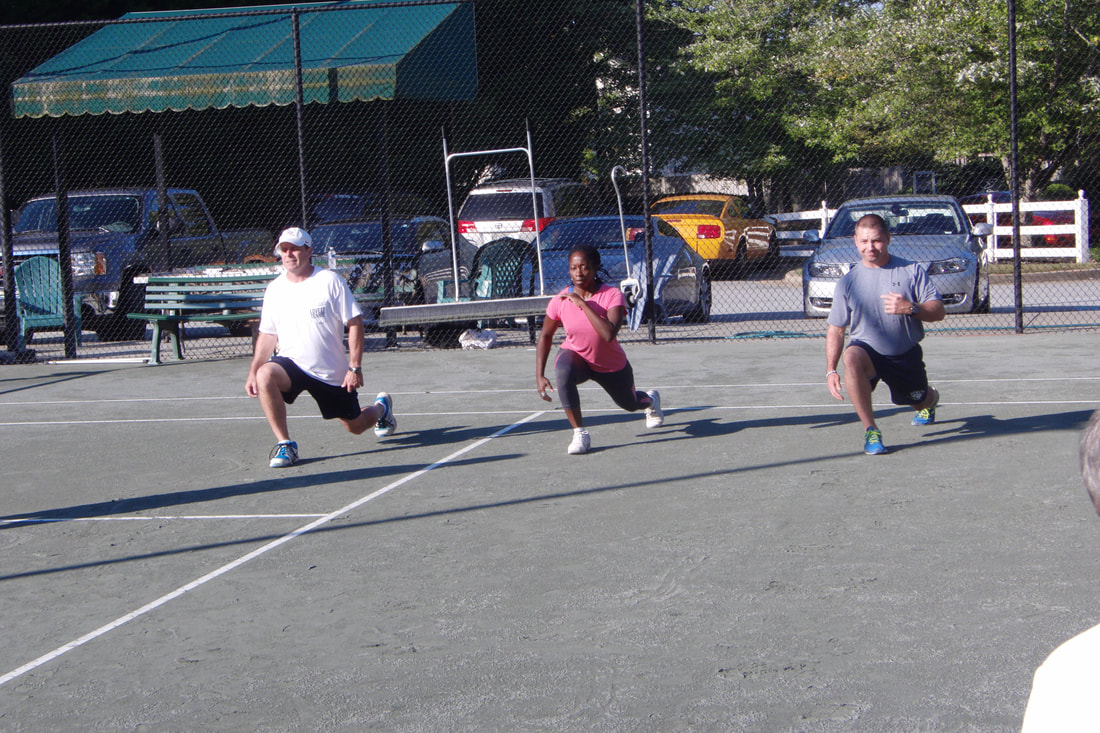
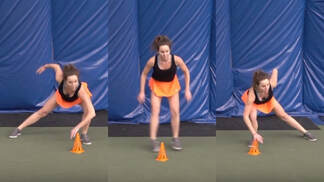
Say that 3 times fast! This phase focuses on activating certain muscles that you know are "weak" or cause you problems. These could be static or reactive based on the specific situations and may be a part of phase 3 to aid in stabilization. When specific activations are complete you would go into movement integration. This is where you perform dynamic movements that put the body in a variety of positions that are similar to what you would see on the court. A well known movement here is a lunge with rotation. The lunge integrates lower body movement, strength and stability with upper body rotation and dissociation. This pattern is seen in almost every single shot in tennis. It is imperative you utilize movements that are multi-planar and connect you to the sport of tennis on a muscle/connective tissue, joint AND nervous system basis.
Phase 5 - CNS (Central Nervous System) Prep
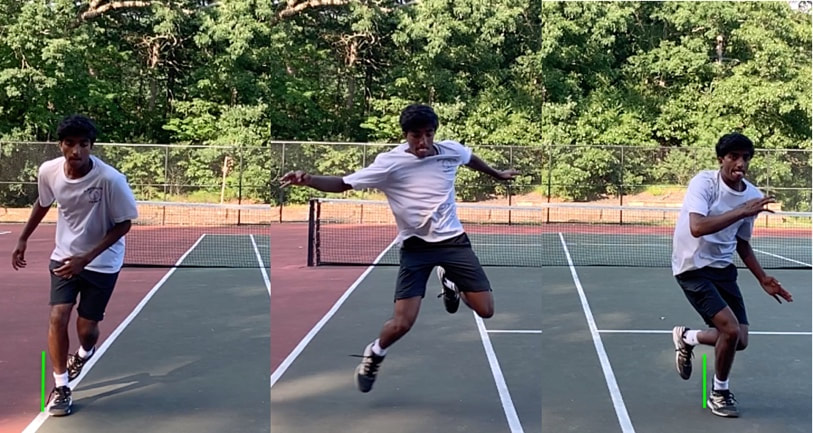
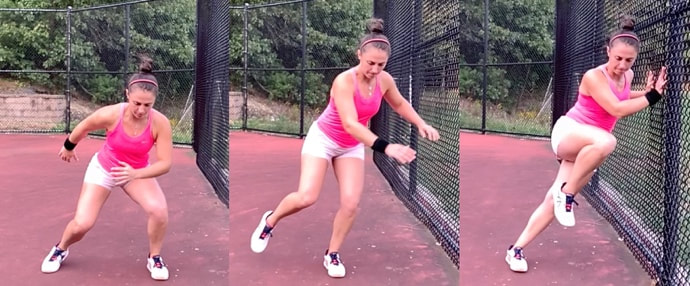
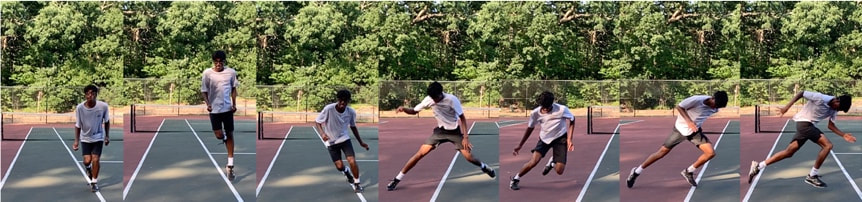
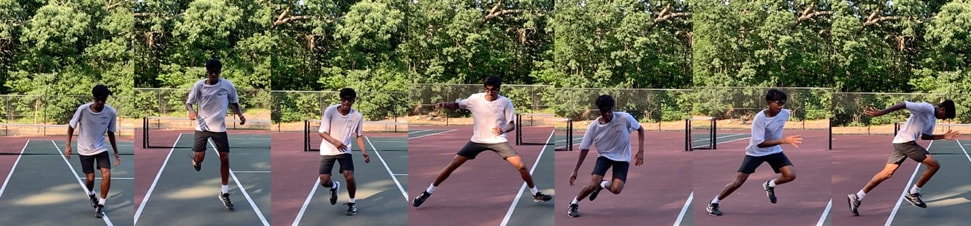
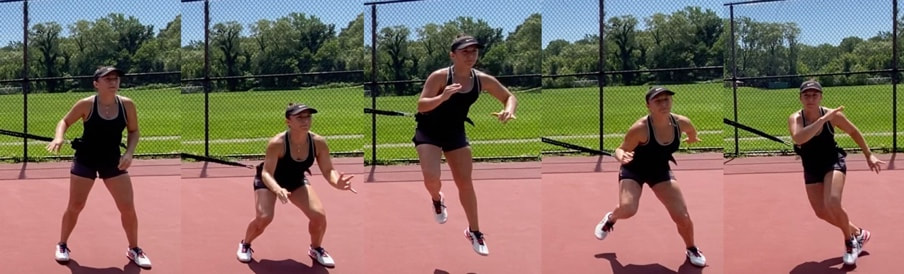
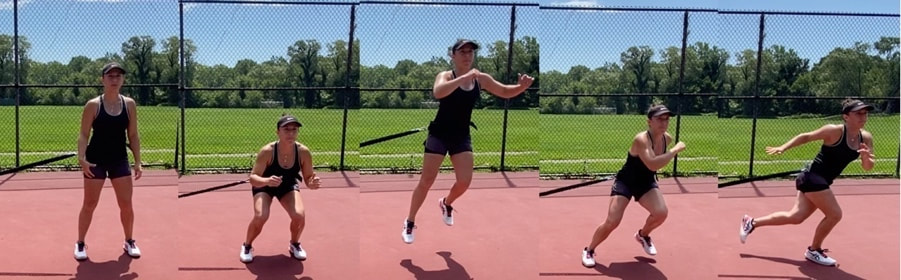
During this phase you would perform as specific as you can movements to what you are about to do on the tennis court. These movements should be fast and explosive in nature to prep your nervous system to fire fast and strong during your on court session/match. This phase does not go on for a long time or high reps. The point here is to activate and prep your system to perform. Alley lunges, alternating lunge jumps, short direction change sprints, explosive banded wood chops are all examples of this.
Phase 6- The Actual Tennis Warm up
This speaks for itself. At this point in time your body and mind are fully prepped to move and hit a tennis ball without restriction and even with added reinforcement. Body temperature has risen from phases 4 and 5 above and your heart rate should have reached an elevated state. You have "warmed up for your warm up." Once this phase is complete, you are ready to go full out from the first point of the match/practice without apprehension, restrictions, weak links and aches.
While it seems like a lot of stuff going on here, you can accomplish this in 10-20 minutes once you get the hang of what you need to focus on. There are certain movements in some phases that overlap and can be done simultaneously as well. All of this depends on your unique situation and what may be needing more or less focus. Regardless, this time seems like a small price to pay for the longevity of your body and enhancing your tennis performance.
For questions about your tennis performance or if you would like help optimizing your tennis warm up for you, don't hesitate to reach out!
Major components that hinder performance AND enhance performance are missed when "you" do this. Doing a proper warm up for tennis not only prepares the body to perform, it can reduce the risk of injuries and put your mind in a state of confidence and high performance. A thorough tennis warm up should be implemented if you are serious about building your body to play at the highest level, and doing it for the long haul.
How familiar does this sound? Start off with some jogging and side shuffles. Maybe add a few leg swings here and there, force your body into some rotational movements and sprinkle in a shotgun approach to some banded shoulder drills. This is seen far too often. Even organized group physical warm ups may be missing some key elements to help take their athletes performance to the next level.
A top notch and thorough warm up should consist of multiple phases that blend together smoothly, build on each other, and eventually lead to the actual tennis hitting warm up. Each phase will focus on different needs for your unique body along with prepping it for the demands of tennis. Naturally warm ups will have many similarities among players, but a really good warm up can be made your own and will have some specifics that are unique to you. Here are my different phases for a complete tennis warm up:
Phase 1 - Release
This phase is imperative for the tennis athlete to focus on the area(s) of their body they know are restricted. This could be a joint with restricted range of motion or muscle tissue that you know needs to be released. There are many methods that can be used to assist in this process. Just going straight out to the court will totally skip over this concept of "releasing" and joint and tissue restrictions will remain active as you are trying to play your best tennis.
Phase 2 - Stretches and Mobilization
This phase focuses on opening up tissue in restricted movement patterns. This phase is also used in opening up different joints ranges of motion that need to express high demands of mobility during play. The ankles, hips, mid back and shoulders are a huge focus here. This phase consists of specific stretches or mobilizations performed with breathing, or in a dynamic fashion.
Phase 3- Correctives and Stabilization
Now that the body is opened up to its best movement potential, you would perform certain corrective exercises. These corrective movements and/or joint stabilizations will help reinforce a desired position or strength in an area that is a cause for potential pain/weakness or inefficiencies in your strokes/movement. They can improve joint mechanics (higher level joint function), as well as solidifying the ranges of motion opened up from phase 2 above. An example of this would be to reinforce the shoulder joint in an overhead position with a bottoms up kettlebell hold. This would be done after mobilizing (phase 2) the proper joints/tissues to allow this new overhead position. This phase is crucial if you want to feel your body is strong, controlled and connected while competing.
Phase 4 - Activation and Multi-Planar Movement Integration
Say that 3 times fast! This phase focuses on activating certain muscles that you know are "weak" or cause you problems. These could be static or reactive based on the specific situations and may be a part of phase 3 to aid in stabilization. When specific activations are complete you would go into movement integration. This is where you perform dynamic movements that put the body in a variety of positions that are similar to what you would see on the court. A well known movement here is a lunge with rotation. The lunge integrates lower body movement, strength and stability with upper body rotation and dissociation. This pattern is seen in almost every single shot in tennis. It is imperative you utilize movements that are multi-planar and connect you to the sport of tennis on a muscle/connective tissue, joint AND nervous system basis.
Phase 5 - CNS (Central Nervous System) Prep
During this phase you would perform as specific as you can movements to what you are about to do on the tennis court. These movements should be fast and explosive in nature to prep your nervous system to fire fast and strong during your on court session/match. This phase does not go on for a long time or high reps. The point here is to activate and prep your system to perform. Alley lunges, alternating lunge jumps, short direction change sprints, explosive banded wood chops are all examples of this.
Phase 6- The Actual Tennis Warm up
This speaks for itself. At this point in time your body and mind are fully prepped to move and hit a tennis ball without restriction and even with added reinforcement. Body temperature has risen from phases 4 and 5 above and your heart rate should have reached an elevated state. You have "warmed up for your warm up." Once this phase is complete, you are ready to go full out from the first point of the match/practice without apprehension, restrictions, weak links and aches.
While it seems like a lot of stuff going on here, you can accomplish this in 10-20 minutes once you get the hang of what you need to focus on. There are certain movements in some phases that overlap and can be done simultaneously as well. All of this depends on your unique situation and what may be needing more or less focus. Regardless, this time seems like a small price to pay for the longevity of your body and enhancing your tennis performance.
For questions about your tennis performance or if you would like help optimizing your tennis warm up for you, don't hesitate to reach out!











 RSS Feed