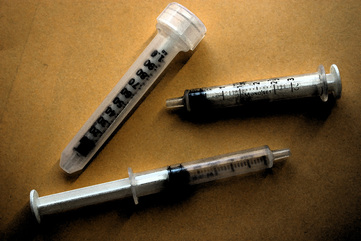
In pro sports many times the difference between making it onto the court or field is an injection. The majority of pro athletes require some form of supplemental help to step onto the court or field at least a few times per year. This supplemental help may be special taping, bracing, electrical or laser treatments, tablets, lotions, pills or injections. We are not talking about illegal substances; we are talking about legal drugs or supplemental techniques that athletes in all sports have routinely come to rely upon to perform at a consistently high level. Unfortunately this is becoming more of the norm than the exception. Being a professional athlete is very difficult and requires playing through pain, and many times it even means playing through injury. However, when this same philosophy is taken down to young athletes or recreational athletes it becomes a major societal problem that needs educated professional individuals to stand up and share evidence-based information to ensure that the athletes (and their families) are informed about the risks as well as the possible rewards. A recent article in The New York Times has brought the rarely discussed underground of professional sport into the open. The article goes into detail with interviews from athletes and expert opinion from medical doctors regarding the use of injectable anti-inflammatory drugs. The main drug discussed in this article was Toradol, an injectable anti-inflammatory drug. Here is a segment from the article:
[ Toradol, a brand name for ketorolac, is among a family of drugs called nonsteroidal anti-inflammatory drugs. Doctors put it in the same class as ibuprofen (like Advil) and Aleve. But unlike those drugs, Toradol can be injected, as well as taken orally, and can act more quickly. It is most commonly used in emergency rooms and post-operation wards to help patients manage short-term inflammation and pain, but athletes are turning to it to deal with inflammation and pain.
The use of Toradol, which is made by a number of drug manufacturers, was at the center of a lawsuit filed in December by a dozen retired N.F.L. players who said the league and its teams repeatedly and indiscriminately administered the drug before and during games, thus worsening injuries like concussions. (The league disputed the claims.)
The suit claimed that the use of Toradol was rampant in the N.F.L., with players lining up in their locker rooms before games to receive injections, a process the players called a cattle call. According to the complaint, no warnings were given and there was “no distinguishing between different medical conditions of the players, and regardless of whether the player had an injury of any kind.”
Dr. Scott Rodeo, the associate team physician of the New York Giants, said that in the National Football League, Toradol “became prevalent to the point where players expected it and used it prophylactically.” Some players, he said, “barely think of them as medicine.” ]
If you are reading this post you are somehow involved in tennis. So the question you are asking is whether a similar situation exists in tennis? It is common for professional tennis players (just like professional athletes in other sports) to take injections and other pain killers to compete at the highest level. The question that needs to be asked is what are the risks involved and do the rewards outweigh the risks. At the professional level it could mean hundreds of thousands — even millions of dollars. However, when we start seeing these drugs being consumed at the junior, collegiate or recreational level it becomes a major concern not only for the healthcare providers in the medical field, but it should also be better understood by the tennis-playing public. The hope of this post is that the average tennis player will spend time reviewing and gaining an in-depth understanding of the pills, potions or injections before administering any type of pain-relieving substances. The purpose of a pain reliever is to mask real, noticeable pain. The body produces these pain sensations to inform us that something is not correct and to warn the body about potential danger. So if we ignore this sensation, we need to be well aware of what the consequences of this ignorance may cause. Please share this information with your tennis playing parents, sons, daughters, other family and friends. Understand what you consume and/or inject and make an informed decision.
[ Toradol, a brand name for ketorolac, is among a family of drugs called nonsteroidal anti-inflammatory drugs. Doctors put it in the same class as ibuprofen (like Advil) and Aleve. But unlike those drugs, Toradol can be injected, as well as taken orally, and can act more quickly. It is most commonly used in emergency rooms and post-operation wards to help patients manage short-term inflammation and pain, but athletes are turning to it to deal with inflammation and pain.
The use of Toradol, which is made by a number of drug manufacturers, was at the center of a lawsuit filed in December by a dozen retired N.F.L. players who said the league and its teams repeatedly and indiscriminately administered the drug before and during games, thus worsening injuries like concussions. (The league disputed the claims.)
The suit claimed that the use of Toradol was rampant in the N.F.L., with players lining up in their locker rooms before games to receive injections, a process the players called a cattle call. According to the complaint, no warnings were given and there was “no distinguishing between different medical conditions of the players, and regardless of whether the player had an injury of any kind.”
Dr. Scott Rodeo, the associate team physician of the New York Giants, said that in the National Football League, Toradol “became prevalent to the point where players expected it and used it prophylactically.” Some players, he said, “barely think of them as medicine.” ]
If you are reading this post you are somehow involved in tennis. So the question you are asking is whether a similar situation exists in tennis? It is common for professional tennis players (just like professional athletes in other sports) to take injections and other pain killers to compete at the highest level. The question that needs to be asked is what are the risks involved and do the rewards outweigh the risks. At the professional level it could mean hundreds of thousands — even millions of dollars. However, when we start seeing these drugs being consumed at the junior, collegiate or recreational level it becomes a major concern not only for the healthcare providers in the medical field, but it should also be better understood by the tennis-playing public. The hope of this post is that the average tennis player will spend time reviewing and gaining an in-depth understanding of the pills, potions or injections before administering any type of pain-relieving substances. The purpose of a pain reliever is to mask real, noticeable pain. The body produces these pain sensations to inform us that something is not correct and to warn the body about potential danger. So if we ignore this sensation, we need to be well aware of what the consequences of this ignorance may cause. Please share this information with your tennis playing parents, sons, daughters, other family and friends. Understand what you consume and/or inject and make an informed decision.






 RSS Feed